What Is Embedded Analytics? Definition, Guide & Examples (2026)
.png?width=88&height=88&name=portrait_agathe_face%20(1).png)
Agathe Huez
Publié le 26.05.25
Mis à jour le 16.04.26
12 min
Résumer cet article avec :
Every SaaS company hits the same inflection point: customers start demanding data. Not exports. Not a spreadsheet they download on Tuesdays. They want live dashboards inside your product, branded to your interface, answering their exact business questions — without leaving your platform.
That's the promise of embedded analytics. And how you deliver it — build in-house, embed a traditional BI tool, or use a purpose-built platform — will shape your product roadmap and competitive positioning for years.
This guide covers everything: what embedded analytics actually is, how it works technically, real-world use cases across industries, the build vs buy decision, and how to evaluate platforms. It's designed for product leaders, CTOs, and engineering teams making this decision in 2025.
What you'll find in this guide:
- What is embedded analytics — and what it is not
- How embedded analytics works technically
- Real-world examples across 5+ industries
- Why you should use embedded analytics (4 key reasons)
- Embedded analytics vs. traditional BI vs. building in-house
- How to choose the right platform (evaluation criteria)
- Vendor comparison: Toucan, Luzmo, Explo, GoodData, Tableau, Power BI and more
- How to run a successful embedded analytics project
What Is Embedded Analytics?
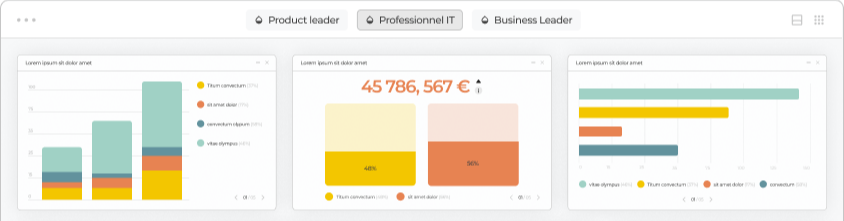
Embedded analytics is the integration of analytics capabilities, dashboards, KPIs, charts, and reports, directly into a SaaS product or application, so end users access data insights without leaving their primary workflow.
Unlike standalone BI tools, embedded analytics is invisible as a separate product: it looks and behaves like a native feature of the platform. For SaaS companies, it is the standard way to deliver customer-facing analytics without building an analytics stack from scratch.
The key differentiator: embedded components load within your application's interface. From the customer's perspective, they're simply using a feature of your platform. They don't know — or need to know — that the analytics layer comes from a specialist vendor.
What embedded analytics is NOT
- An iFrame of a Tableau dashboard pasted into your product with no authentication
- A scheduled email report or CSV download
- A standalone analytics tool your customers have to log into separately
- Read-only access to your internal BI environment
Real embedded analytics means full technical integration: authentication (SSO or JWT), row-level security, white-label branding, and a UX indistinguishable from the rest of your product.
Today, the 'embedded' model extends beyond analytics. Treezor offers embedded finance, Frontegg offers embedded authentication. Embedded analytics follows the same principle: specialist capability delivered as a seamless product layer, so ISVs can ship faster without building from scratch.
How Embedded Analytics Works
Before evaluating vendors, you need to understand what's under the hood. Embedded analytics has several distinct layers, and the way platforms handle each one determines whether you're looking at a 3-week integration or a 3-month engineering project.
Data Connectivity
The foundation is connecting your data sources. Most embedded analytics platforms support:
- SQL databases: PostgreSQL, MySQL, MariaDB
- Cloud warehouses: Redshift, BigQuery, Snowflake, Databricks
- REST APIs and HTTP connectors for SaaS metrics
- CSV/file uploads for early-stage or batch data
The modern pattern: your data pipelines feed a warehouse, transformations happen in dbt or similar, and the analytics platform reads from clean, pre-aggregated tables. The less transformation you push into the analytics layer, the faster and more maintainable your setup.
Semantic Layer
A semantic layer translates raw database fields into business-friendly concepts: "Revenue" instead of "sum(orders.amount_cents) / 100". It's what lets non-technical builders configure dashboards without knowing SQL.
For AI-powered analytics (like Toucan), the semantic layer becomes critical: it's what allows natural language queries to resolve to the correct metrics rather than hallucinating table names.
Dashboard Builder
Who builds the dashboards? In most embedded analytics scenarios, it's your product team or ops team — not data engineers. The best platforms offer no-code or low-code builders where a product manager can:
- Define charts, KPIs, and tables visually
- Configure filters and dynamic variables
- Set up navigation flows (what happens when a user clicks a chart)
- Preview how the dashboard looks for different tenant configurations
The alternative — developer-only dashboard tooling — creates a bottleneck. Every iteration requires an engineering sprint. Avoid it if you can.
White-Label & Theming
Your customers shouldn't know they're using a third-party analytics tool. White-label capabilities typically include:
- Custom logo, colors, and typography matching your brand
- Ability to remove all vendor branding
- Custom domain for the analytics module (if externally hosted)
- CSS-level overrides for precise pixel matching
This matters more than it sounds. Analytics that look foreign erode user trust and reduce adoption. Customers engage with data significantly more when it looks like a native part of the product they use daily.
Multi-Tenancy & Row-Level Security
This is the make-or-break capability for ISVs. You have hundreds or thousands of customers, each of whom should only see their own data.
Row-level security (RLS) filters data at query time based on the authenticated user's attributes — their org ID, role, region, whatever your data model uses. Done right, one dashboard configuration serves all tenants. Done wrong, you're maintaining separate dashboards for every customer segment.
What to look for: RLS should be enforced server-side by the analytics platform, not just in your front-end. Client-side filtering is not security.
Authentication & SSO
Users shouldn't re-authenticate to see their analytics. Standard integration patterns:
- JWT tokens: your backend generates a signed token containing user identity, role, and tenant; Toucan validates it and renders the appropriate view
- SSO / SAML / OIDC: federated identity via your existing auth provider
- Anonymous embedding: public-facing dashboards with no auth (for marketing pages or public data portals)
→ See also: Embedded Analytics Architecture: Components and Best Practices
Real-World Examples of Embedded Analytics by Industry
Embedded analytics applies across virtually every B2B software vertical. Here are the most common implementation patterns by sector.
SaaS & Product Analytics
A SaaS provider embeds analytics directly into their admin portal, allowing customers to monitor user adoption, feature utilisation, and account health. The self-service dashboard lets account administrators visualise which features are most used, identify power users, and track ROI — without contacting the vendor's support team.
Business impact: improved customer retention, reduced support load, and a clear signal to buyers that the platform delivers measurable value.
Financial Services & Wealth Management
A wealth management firm embeds portfolio analytics into their client portal, transforming static account statements into interactive visualisations that show performance in context — benchmark comparisons, risk exposure, goal tracking. Advisors gain a client-facing analytics layer that justifies premium pricing tiers.
Healthcare
A healthcare network embeds clinical and operational analytics into their EHR system. Physicians see their performance metrics against peers and evidence-based benchmarks without leaving their primary workflow. Department heads identify best practices and optimise resource allocation in real time.
Logistics & Field Services
A fleet management platform embeds delivery performance, SLA adherence, and fuel efficiency dashboards directly into their customer portal. B2B clients see their operational KPIs without waiting for a weekly report or calling their account manager.
Marketing & Agency Platforms
A digital marketing agency embeds campaign analytics into their client portal. Clients monitor performance metrics in real time — impression share, conversions, attributed revenue — replacing manual PDF reports that took the agency team hours to produce each week.
Key patterns across successful implementations
- Consistent branding: the analytics feel like a native extension of the core product, not a bolted-on tool
- Start focused, then expand: one high-value use case first, then additional dashboards over time
- Authentication is non-negotiable: SSO or JWT from day one, not retrofitted later
- Role-based views: different user types (admin, end user, manager) see different data — customised, not overwhelming
Why Use Embedded Analytics? 4 Reasons That Matter
1. Deliver a better product experience — without reinventing the wheel
Analytics and data visualisation are disciplines in their own right. Building compelling, accurate, performant charts inside a core product without substantial investment leads to mediocre results.
At Toucan, the entire platform is built around embedded AI analytics — structured, conversational data experiences that guide non-technical users to insights without requiring them to understand the data model underneath.
2. Faster time to market with real user feedback
Embedding a third-party analytics platform lets you ship the feature in weeks, gather real user feedback, and iterate — rather than spending 6–12 months building something in-house only to discover users want something different. Speed to feedback is a competitive advantage.
3. Capital efficiency — test before committing
When launching analytics as a product feature, start with a phased investment. Deploy a focused MVP, measure adoption, and validate market demand before committing significant engineering resources. The first POC often reveals that users want something quite different from what was initially scoped.
4. Delegate the technical burden
Maintaining an in-house analytics stack is a permanent tax on your engineering team: performance issues, security patches, visualisation library updates, infrastructure scaling. Delegating this to a specialist vendor protects your engineering capacity for core product development.
→ See also → Embedded Analytics ROI: How to Calculate It
Embedded Analytics vs. Traditional BI vs. Building In-House
This is the decision every product team faces. The right answer depends on your audience, your timeline, and your engineering capacity. Here's an honest comparison.
|
Criterion |
Embedded Analytics (Toucan) |
Traditional BI (Tableau, Power BI) |
Build In-House |
|---|---|---|---|
|
Target user |
External customers, partners |
Internal analysts |
Depends on build |
|
Time to deploy |
2–6 weeks |
3–6 months setup |
6–18 months |
|
White-label |
Native, fully configurable |
Limited / complex |
Custom but costly |
|
Multi-tenancy |
Built-in |
Complex custom setup |
Full custom dev |
|
No-code builder |
Yes — for product & ops teams |
Partial (analyst-first) |
No |
|
TCO (3 years) |
Predictable SaaS pricing |
High licence + services |
High dev + maintenance |
When traditional BI falls short for embedded use cases
- Traditional BI tools (Tableau, Power BI, Looker) were designed for internal analysts — they assume the user knows what a dimension is and has 30 minutes to build a report
- Embedding them requires significant engineering work: custom auth, complex multi-tenant configuration, limited white-label options
- Licence costs scale with seats in ways that make customer-facing deployment expensive at scale
- The UX is analyst-centric — not designed for non-technical end users who need guided, contextual experiences
When building in-house makes sense — and when it doesn't
Building makes sense when your analytics use case is so deeply tied to your core product logic that no external tool could model it accurately, and you have dedicated engineering bandwidth for ongoing maintenance.
In practice, most ISVs who build in-house underestimate the long-term maintenance cost by 3–5x. The initial build takes 6–18 months. The ongoing work — performance, security patches, feature requests from customers, infrastructure scaling — becomes a permanent engineering commitment.
→ Full analysis → Embedded Analytics Build vs Buy: The Decision Framework
→ Full analysis → Embedded Analytics vs Traditional BI: Full Comparison
How to Choose an Embedded Analytics Platform: 5 Evaluation Criteria
Most vendor evaluations either over-engineer the process (6-month POC) or under-scope it (demo + price + gut feeling). Here's a practical framework for making the right decision.
Criterion 1 — Multi-tenancy and row-level security
This is the non-negotiable for ISVs. Each of your customers should see only their own data. Row-level security must be enforced server-side by the analytics platform — not in your front-end code.
- Ask vendors: how is RLS configured? Is it enforced at query time, or after data is returned to the browser?
- Test it: create two test tenants and verify one cannot access the other's data under any circumstances
- Check: does RLS configuration update automatically when users or roles change, or does it require manual intervention?
Criterion 2 — White-label depth
The analytics module should be invisible as a third-party product. Test white-label at the pixel level, not just with a logo swap.
- Can you remove all vendor branding, including in error messages and loading states?
- Can you match your brand's exact typography, colour system, and interaction patterns?
- Is CSS-level override supported for precision matching?
→ See also → White Label Analytics: Complete Guide
→ See also → White Label Reporting: Complete Guide for ISVs
Criterion 3 — Builder experience for non-technical teams
Ask yourself: who will maintain the dashboards 12 months from now? If the answer is 'a data engineer', you've created a bottleneck. Run the builder evaluation with the actual person who will own the content — a product manager or ops lead, not your tech lead.
- Can a non-technical builder create and publish a dashboard without writing SQL?
- How long does it take to go from connecting a data source to a published dashboard?
- When a business user wants to add a new metric, is that a 15-minute task or a 2-week sprint?
Criterion 4 — End-user experience
Most evaluation processes optimise for the builder experience and forget the end user. Run a short user test with 2–3 representative customers. Watch what confuses them.
- Is the interface intuitive for non-analysts without training?
- Does it work on mobile? (Frequently required, frequently overlooked)
Criterion 5 — Total cost of ownership
Licence cost is rarely the right metric to optimise on. Factor in:
- Integration engineering time (one-time cost)
- Ongoing content maintenance and iteration (recurring cost)
- Opportunity cost of delayed analytics feature launch
- Risk cost of a build-in-house approach that delays your roadmap by 12+ months
→ Calculate it → Embedded Analytics ROI: How to Calculate It
Embedded Analytics Platform Comparison (2026)
The embedded analytics market has grown significantly. Here's an honest comparison of the main platforms, mapped to the use cases they serve best.
|
Platform |
Best For |
Storytelling / Guided UX |
White-Label |
No-Code Builder |
Deployment |
|---|---|---|---|---|---|
|
Toucan ★ |
ISVs & SaaS — customer-facing analytics |
⭐⭐⭐⭐⭐ (core feature) |
Full native |
⭐⭐⭐⭐⭐ |
SaaS + Self-hosted |
|
Luzmo |
SaaS dashboards, end-user editing |
⭐⭐ |
Good |
⭐⭐⭐⭐ |
SaaS |
|
Explo |
Developer-first, fast integration |
⭐⭐ |
Good |
⭐⭐⭐ |
SaaS |
|
GoodData |
Enterprise embedded analytics |
⭐⭐⭐ |
Good |
⭐⭐⭐ |
SaaS + Self-hosted |
|
Tableau Embedded |
Rich visualisation, analyst-centric |
⭐⭐ |
Limited |
⭐⭐ |
SaaS + On-prem |
|
Power BI Embedded |
Microsoft ecosystem |
⭐⭐ |
Limited |
⭐⭐⭐ |
Azure |
|
Sisense |
Large orgs, custom analytics |
⭐⭐ |
Good |
⭐⭐ |
SaaS + On-prem |
|
Metabase (OSS) |
Startups, internal use, cost-sensitive |
⭐ |
Minimal |
⭐⭐ |
Self-hosted |
Toucan is an embedded AI analytics platform built for SaaS product teams. It delivers white-label, customer-facing analytics via web component or React component, with native multi-tenant row-level security and a conversational AI layer — live in 4 to 8 weeks, with zero permanent engineering overhead after go-live.
→ Best AI embedded analytics tools 2026 — if you're specifically evaluating platforms with conversational AI capabilities
When Toucan is the right fit
- You're an ISV or SaaS company embedding analytics for external customers
- Your end users are business stakeholders — they need clarity and guidance, not raw self-service exploration
- Your product team wants to own and iterate dashboards without engineering tickets
- You need full white-label branding and native multi-tenant data isolation
- You want a conversational AI layer and structured data experiences for non-technical end users, not just charts
- You need SaaS and/or self-hosted deployment (data sovereignty, regulated industries)
When Toucan may not be the right fit
- Your users are power analysts who need open-ended SQL-level exploration
- Your primary use case is internal BI for a data team (Looker, dbt + Metabase, or Tableau are better fits)
- You need real-time streaming analytics at very large scale (specialised time-series tools may be more appropriate)
→ Full breakdown → Best Embedded Analytics Platfor 2025
→ Comparison → Toucan vs Luzmo
→ Comparison → Toucan vs GoodData
→ Comparison → Toucan vs Tableau Embedded
How to Run a Successful Embedded Analytics Project
Step 1 — Define your analytical requirements and objectives
Start by mapping your end users' actual needs. What decisions do they make daily that data could improve? What are the 3–5 KPIs they care about most? Resist the temptation to expose everything — curated, relevant dashboards drive adoption. Exhaustive data dumps don't.
Identify your data sources, estimate volumes, and clarify which departments (sales, operations, finance) need coverage. Define success metrics upfront: what adoption rate, engagement frequency, or customer satisfaction score would make this project a clear win?
Step 2 — Choose a platform with minimal legacy
Look for a platform purpose-built for embedded, customer-facing use cases — not a traditional BI tool you're trying to adapt. Prioritise platforms that offer strong onboarding, thorough documentation, and responsive technical support. These reduce integration risk significantly.
- Avoid platforms with complex proprietary modelling languages that only specialist engineers can maintain
- Prioritise no-code or low-code builders so your product team can own the content layer
- Validate that the vendor has an active ISV customer base — not just internal BI deployments
Step 3 — Integrate with your data ecosystem
Work with your data team to confirm that the relevant tables and metrics are available in a format the platform can query efficiently. The best embedded analytics implementations sit on top of pre-aggregated, clean data — they don't do heavy transformation inside the analytics layer.
Define your row-level security logic early. The RLS configuration is the most common source of delays in embedded analytics projects — leaving it to the end creates re-work.
Step 4 — Train your team and manage change
Adoption doesn't happen automatically. Plan training sessions for the internal builders who will create and maintain dashboards. Communicate clearly to customers what's changing, why it matters to them, and how to use the new analytics features.
A change management component — however lightweight — consistently improves adoption rates in embedded analytics deployments.
SaaS teams who've deployed Toucan describe the experience consistently: "Sharing data with customers is no longer a hassle" and "deployment in almost 3 clicks." For teams worried about integration complexity, real-world feedback matters more than vendor benchmarks. [Source: G2 Reviews — https://www.g2.com/products/toucan/reviews]
AI-Powered Embedded Analytics: What's Next
The next frontier in embedded analytics isn't better chart types — it's conversational access to data. Users ask a business question in natural language and get an instant, contextualised answer with a visualisation, without touching a filter or knowing a column name.
Toucan takes this direction: conversational analytics where natural language queries are resolved against a governed semantic layer, with results returned as interactive charts that can be pinned to dashboards. Critically, AI-powered analytics only works reliably when it's grounded in a semantic layer and enforced by proper row-level security — an AI that can answer any question but might expose another tenant's data is not production-ready.
Our guide to AI in embedded analytics covers the full architecture: how AI layers sit on top of multi-tenant data, and what it takes to ship this in a SaaS product.
→ See also → AI-Powered Analytics: Complete Guide
Frequently Asked Questions
What is the difference between embedded analytics and traditional BI?
Traditional BI tools (Tableau, Power BI, Looker) are designed for internal analysts who want to explore data freely. Embedded analytics is designed for external customers and business stakeholders who need specific, contextualised insights inside an application they already use. The UX, deployment model, multi-tenancy, and white-label requirements are fundamentally different.
What is the difference between embedded analytics and white-label analytics?
Embedded analytics refers to the technical integration of analytics into a product. White-label analytics adds a branding layer on top: the analytics look like your product, with no visible traces of the underlying vendor. Most embedded analytics platforms offer white-labeling, but they're not the same thing.
→ See also → White Label Analytics: Complete Guide
Is embedded analytics the same as embedded BI?
The terms are often used interchangeably. Embedded BI typically refers to embedding traditional business intelligence dashboards (built for analysts) into another application. Embedded analytics is broader — it includes any analytics experience integrated into a product, often with a stronger focus on non-technical end users and customer-facing contexts.
How does row-level security work in embedded analytics?
RLS filters database rows at query time based on the authenticated user's attributes. In a multi-tenant SaaS context: when a customer from Company A logs in, every query automatically appends a filter such as WHERE org_id = 'company_a'. They can never see data from Company B, even if they're looking at the same dashboard configuration. This filtering is enforced server-side by the analytics platform.
How long does it take to implement embedded analytics?
With a purpose-built embedded analytics platform, the typical timeline is 2–6 weeks from kickoff to live customer access. Building in-house typically takes 6–18 months for an equivalent feature. The Sopht team, a Toucan customer, went from kickoff to live customer dashboards in 4 weeks — saving an estimated 6 months of product development.
What is AI-powered embedded analytics?
AI-powered embedded analytics adds a conversational layer on top of standard dashboards: users ask a business question in natural language and receive an instant, contextualised answer with a chart — without touching a filter or knowing a column name. For SaaS teams, it eliminates the need for an analyst intermediary between the data and the end user. Platforms like Toucan ground AI responses in a governed semantic layer with row-level security enforced at query time, making it safe for multi-tenant customer-facing deployment.
What's the typical cost of an embedded analytics platform?
Pricing varies by vendor and model. Common patterns: per-seat (charged per end user or builder), usage-based (API calls or queries), or flat-rate tiers by data volume or features. Purpose-built embedded analytics platforms are typically significantly cheaper than the total cost of building and maintaining equivalent functionality in-house — particularly when you factor in ongoing maintenance.
Conclusion
Embedded analytics is no longer a product differentiator for most SaaS categories — it's table stakes. Customers expect to see their data in your product. The question isn't whether to build it, but how to ship it efficiently enough to become a competitive asset rather than an engineering burden.
The best embedded analytics implementations share three things: they're built for non-technical end users, they're natively integrated with strong security and branding, and they're owned by product and ops teams — not just data engineers.
If you're evaluating your options, Toucan is an embedded AI analytics platform built for SaaS product teams — white-label, multi-tenant, AI-native, and live in 4 to 8 weeks.
.png?width=112&height=112&name=portrait_agathe_face%20(1).png)
Agathe Huez
Agathe is Head of Brand & Communication at Toucan, with over 10 years of experience in marketing, branding, and corporate communication, particularly in the SaaS and tech B2B sectors. An expert in brand strategy, storytelling, and public relations, Agathe helps businesses give meaning to their communication and showcase their expertise to clients and partners. She plays a key role in growing Toucan’s visibility and positioning as a leading embedded analytics solution, both in France and internationally. On Toucan’s blog, she shares insights on how to build impactful B2B brands, create memorable experiences, and turn data into a true competitive advantage.
Voir tous les articles